

Italian Memories #3. The Kidnapping of Aldo Moro
In the spring of 1978, the Brigate Rosse held Italy's most powerful politician for 55 days while the State refused to negotiate. It is still the most divisive wound in the history of the Republic.
Italian Memories is a weekly series. Every Wednesday, one fact, one face, or one date that made us who we are. Some of these stories are wounds. Others are triumphs. All of them are the things Italians of a certain age know without being told, and that the rest of the world has either never heard, or heard wrong. This is the memory underneath the country.
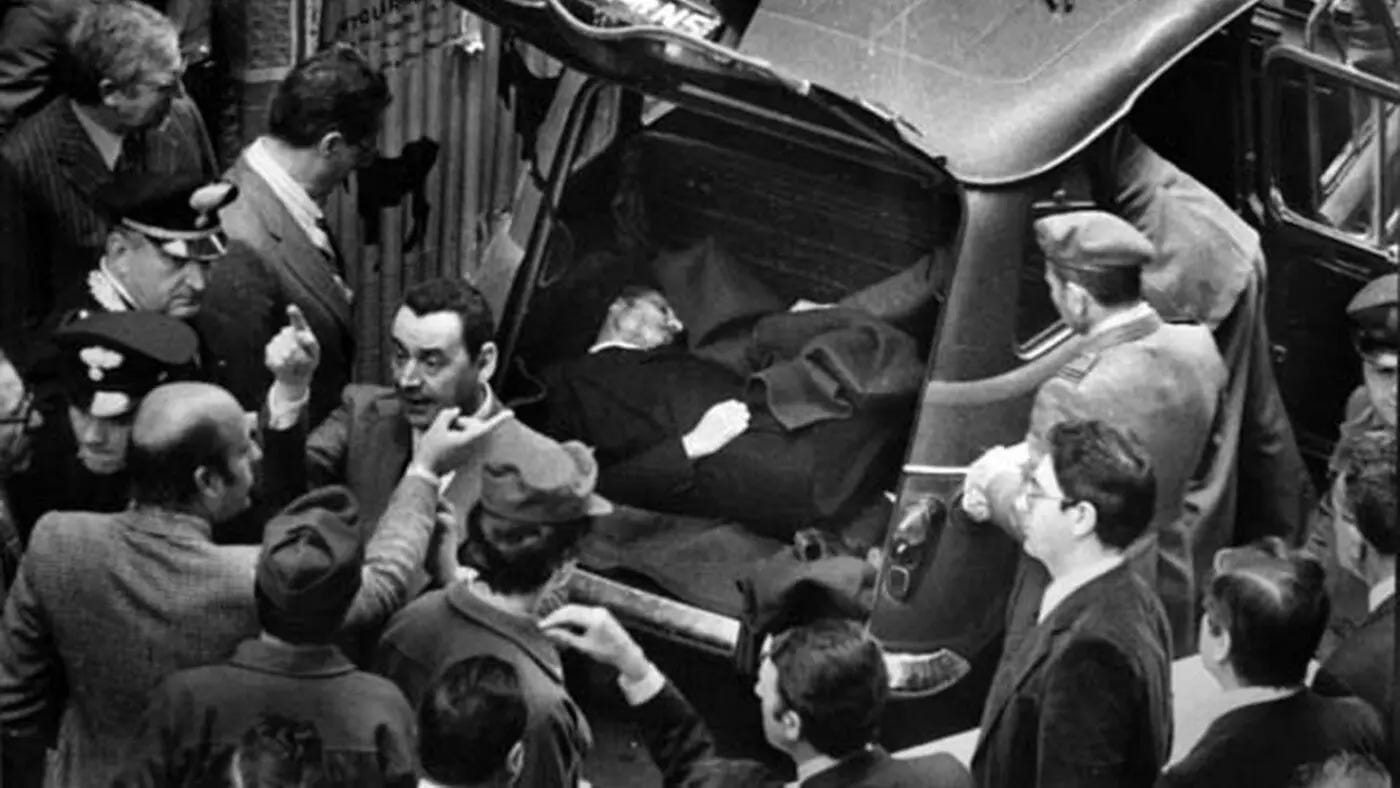
Rome. Via Mario Fani, in the Trionfale district, a little after nine on the morning of March 16, 1978. Two cars come down the hill toward the city centre: a dark Fiat 130 carrying the president of the Christian Democrats, and the escort car behind it. At the corner of Via Stresa a small white Fiat brakes across their path. Men in Alitalia uniforms — blue raincoats, blue peaked caps, the costume of the most ordinary morning in the world — turn and open fire.
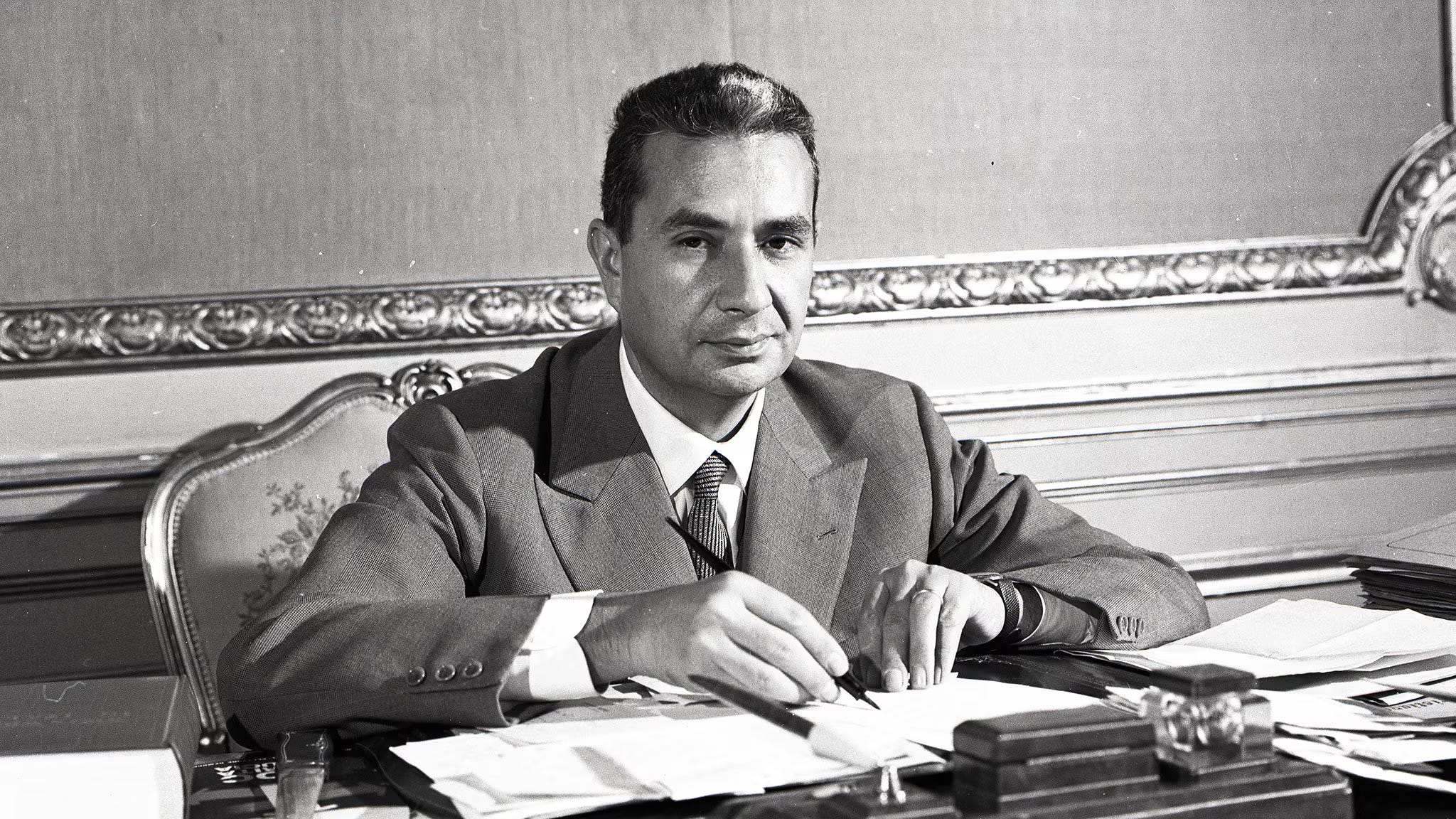
In under two minutes they put more than 90 rounds into the two cars. Five men of the escort die: Oreste Leonardi and Domenico Ricci, the two carabinieri riding with Moro; Giulio Rivera, Raffaele Iozzino and Francesco Zizzi, the three policemen in the car behind. Iozzino is the only one who manages to get out and fire back. Zizzi is still breathing when they lift him; he dies on the way to the Gemelli. Aldo Moro is dragged from the back seat into another car, and the commando is gone in the traffic within minutes.
A few kilometres away, the Chamber of Deputies was already filling. That same afternoon Parliament was to vote confidence in a new government led by Giulio Andreotti — and for the first time in the history of the Republic, the Italian Communist Party, the largest in the West, would keep a government alive instead of trying to bring it down. It was Moro’s government in everything but the name on the door. He had spent years building toward exactly this morning. The Brigate Rosse did not pick a random Thursday.
What followed is the most examined crime in the history of the Republic, and what stayed in the national memory is almost none of the forensics — not the licence plates, not the safe houses, not which parliamentary commission contradicted which. What stayed is a number. Cinquantacinque giorni. Fifty-five days in which the man who had spent his life teaching Italy’s enemies to sit at the same table was alive, and writing, and asking to be saved — while the State he had helped build decided, in full view of everyone, that it would not trade for him. Moro is not a story about terrorism. He is the story of the spring Italy found out what its own survival was prepared to cost.
If you’ve ever wondered why this country argues about 1978 as if it were last week — this is the series for that. Italian Memories goes out every Wednesday to members. The rest of this piece is for them.
I protagonisti
Italian politics in 1978 was a small, crowded room. Before we go in, here is who was in it.
Aldo Moro — president of the Christian Democrats, five times prime minister, the man being kidnapped. The architect of the compromesso storico.
Democrazia Cristiana (DC) — the Catholic centrist party that had governed Italy without interruption since the war. Moro’s party, and the one that refused to deal for him.
Partito Comunista Italiano (PCI) — the Communist Party of Enrico Berlinguer, the largest in the Western world, about to keep a government alive for the first time instead of voting it down. Moro’s intended partner.
Brigate Rosse (BR) — the far-left armed group that carried out Via Fani, held Moro for 55 days, and killed him. Run, during the operation, by Mario Moretti.
