

Italian Memories #1 — Enzo Tortora: Italy's most loved face, in Handcuffs
In 1983 Italy arrested its most beloved television host on the word of three murderers. By the time it apologized, he was dying of the cancer prison gave him.
Italian Memories is a weekly series. Every Wednesday, one fact, one face, or one date that made us who we are. Some of these stories are wounds. Others are triumphs. All of them are the things Italians of a certain age know without being told, and that the rest of the world has either never heard, or heard wrong. This is the memory underneath the country.The return
He walks onto the set. The studio has been waiting four years. He is fifty-eight and looks ten years older. He sits at the desk where he sat every Friday between 1977 and 1983, smiles the smile of a man who has decided not to cry on television, and asks the question that will outlive him by a century.
Dunque, dove eravamo rimasti?
Well then. Where were we.
The audience applauds for almost a full minute. He waits. Then he says something Italians will quote less often, but which is the actual key to everything that follows. He says he is back, and he will stay back, anche per parlare per conto di quelli che parlare non possono. E sono molti. E sono troppi. Also to speak for those who cannot speak. There are many. There are too many.
That is the moment Enzo Tortora stopped being a television presenter and became something the Italian language did not yet have a word for. The word was invented after him, and it is his name.
The word
The case is famous. The cultural fact is less so. Italians of a certain age remember the arrest, the manacles, the prison, the acquittal, the cancer, the death. What they often do not say out loud — because saying it sounds like a confession — is that Tortora’s real legacy is grammatical.
Metodo Tortora. The Tortora method. You can drop the phrase today at a dinner table in Rome, a bar in Naples, a newsroom in Milan, and anyone over forty knows what you mean. A coordinated press campaign to destroy a reputation before any trial. A few real facts mixed with rumour. Leaks from people with reasons of their own. A verdict before any judge has spoken.
It is in the dictionaries now. A proper noun that escaped its original owner and became a unit of measurement for everything that came after.
To name something is to begin to defend yourself against it. Italy did not have that word before 1983. After 1983, it had it. The country gave it Enzo Tortora’s name, and Tortora paid for the privilege with his lungs.
Before
Genoa, November 30, 1928. He starts in RAI in the early fifties, the first generation of Italian television. Campanile d’oro, Primo applauso, Canzonissima. He presents Sanremo in 1959. He runs La Domenica Sportiva and turns the moviola, the slow-motion football replay, into a national institution.
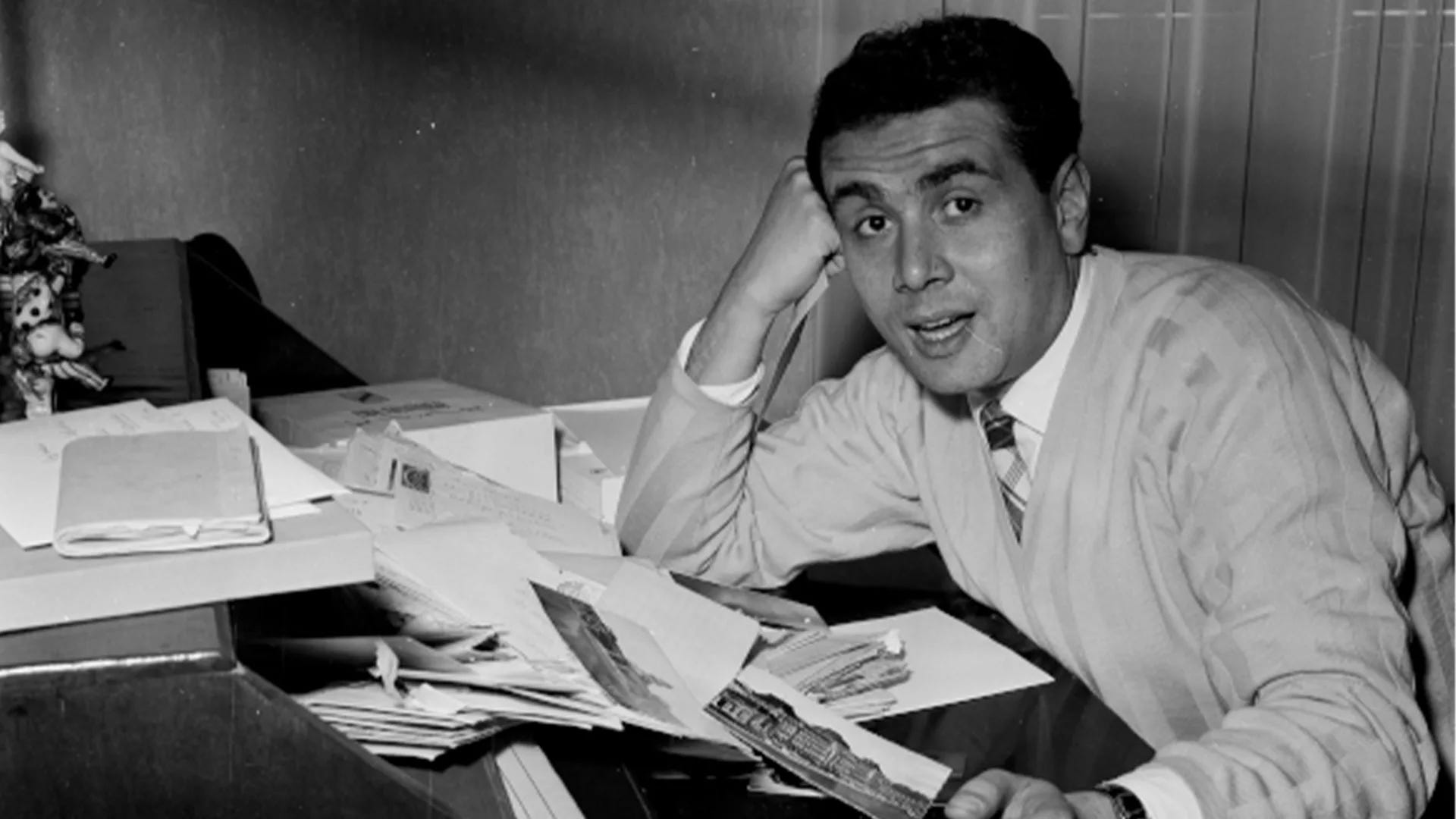
He has a problem with authority that gets him fired from RAI twice. Once in 1962, for letting an impersonator mock Prime Minister Fanfani live on air — he takes the blame himself so no one below him loses his job. Once in 1969, for an interview in which he calls RAI un jet colossale guidato da boy scout, condannato a schiantarsi sulle rocce: a colossal jet piloted by boy scouts, destined to crash on the rocks. He spends years in Switzerland, working for Italian-language Swiss TV, in exile from Italian Italian television.
He is also a journalist. A man of the liberal right at a time when most of his colleagues are on the left, and he does not pretend otherwise. In 1971, when 800 intellectuals sign an open letter accusing the police commissioner Luigi Calabresi of having murdered the anarchist Pinelli — a letter published next to an article by Camilla Cederna — Tortora is one of the very few journalists who defends Calabresi publicly. He becomes the commissioner’s friend. Calabresi is assassinated in 1972.
Remember this. The list of people who hated Enzo Tortora began long before anyone accused him of a crime.
In 1977 he creates Portobello. Twenty-two, sometimes twenty-eight million viewers every Friday night. A live flea market, a parrot, ordinary citizens selling absurd inventions to pay off small debts, money funnelled into cancer research and earthquake relief. Three and a half billion lire raised for cancer alone. Half of Italy watches Portobello. The other half pretends not to.
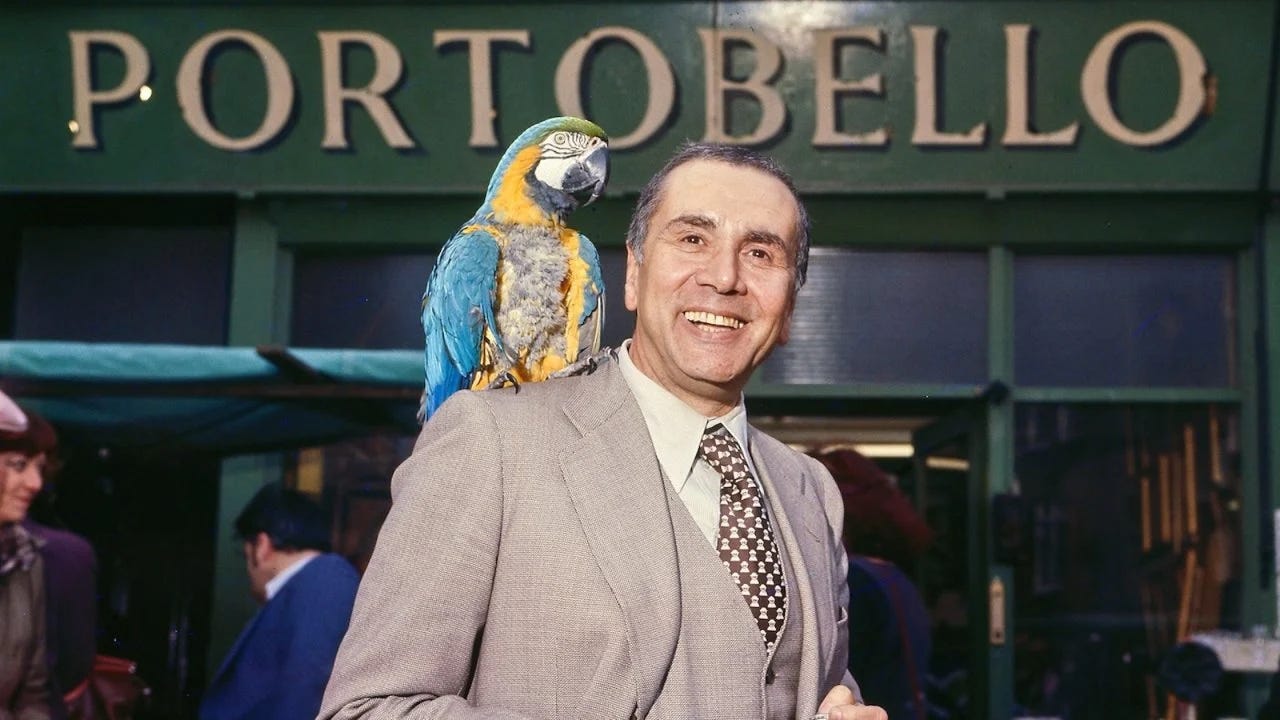
He is also disliked by people who matter. By RAI executives. By colleagues he has criticized in print. By politicians he has mocked. By the intellectual left, which has not forgiven him for Calabresi.
In the spring of 1983 he is at the height of his fame. In June, the hatred finds its instrument.
The dawn
Dawn of June 17, 1983. Hotel Plaza, Rome. Tortora is asleep. The carabinieri ring the bell. He opens the door in his pyjamas, sees the men in the corridor, understands.
